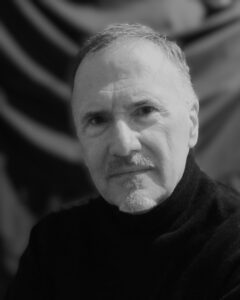
Wolfgang Amadeus Mozart
Requiem
Exsultate Jubilate (Soprano soloist)
A prolific artist, Austrian composer Wolfgang Amadeus Mozart created a string of operas, concertos, symphonies and sonatas that profoundly shaped classical music.
Mozart was a musician capable of playing multiple instruments who started playing in public at the age of 6. Over the years, Mozart aligned himself with a variety of European venues and patrons, composing hundreds of works that included sonatas, symphonies, masses, chamber music, concertos and operas, marked by vivid emotion and sophisticated textures.
Born in 1756, in Salzburg, Austria, Mozart is widely recognized as one of the greatest composers in the history of Western music. With Haydn and Beethoven he brought to its height the achievement of the Viennese Classical school. Unlike any other composer in musical history, he wrote in all the musical genres of his day and excelled in every one. His taste, his command of form, and his range of expression have made him seem the most universal of all composers.
Mozart’s death in 1791, however, came at a young age, even for the time. At the time of his death, though, Mozart was considered one of the greatest composers of all time. His works remained secure and popular throughout the 19th century, as biographies about him were written and his music enjoyed constant performances and renditions by other musicians. His work influenced many composers that followed – most notably Beethoven.
His music continues to be celebrated and is considered, alongside the works of his friend Joseph Haydn, a pinnacle of the symphonic, chamber, operatic, and choral repertoires. He is still widely studied and performed today.
Mozart composed Exsultate, jubilate, his best known solo motet, for the famous soprano castrato Venanzio Rauzzini. Rauzzini (1746-1810) was born near Rome, became a principal at the opera in Vienna and served at the court in Bavaria.
Mozart had come to know him at the end of 1772 in Milan, when the ducal court in that city hired Rauzzini to sing in the premiere of the young Mozart’s opera Lucio Silla. Mozart, who admired Rauzzini’s singing, wrote the virtuosic Exsultate, jubilate for him a month later. The work premiered in a Milan church on January 17,1773, whilst the production of Lucio Silla was still running.
In the following year,1777, Rauzzini moved permanently to England and established himself in Bath, where he lived for the remainder of his life. There he directed a concert series, sang, composed a great deal of music, and became the esteemed teacher of many fine singers, many of whom later worked with Mozart in Vienna.
Mozart’s Requiem in D minor is considered a profound and unfinished masterpiece that reflects both the composer’s genius and the circumstances of its creation.
Mozart composed the Requiem in late 1791, during a time when he was facing significant personal and health challenges. He was commissioned by Count Franz von Walsegg to create the piece in memory of the Count’s wife, who had died earlier that year. Mozart passed away on December 5, 1791, before he could complete the work.
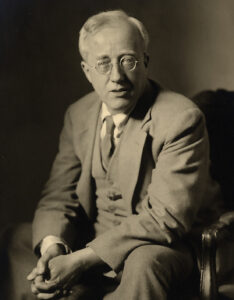
Gustav Holst
Part Songs Opus 12 & I Love My Love Opus 36B
St Paul’s Suite (instrumental)
Gustav Holst (1874-1934) was an English composer and music teacher, best known for his orchestral suite “The Planets,” which has become a staple of classical music.
Holst was born in Cheltenham in 1874, into a family of Latvian-Russian origin with a strong musical tradition, with professional musicians in three generations of the family. His father was a professional musician, which greatly influenced his interest in music.
Holst’s father taught him the piano, violin and trombone, and the young musician went on to study with Stanford at the Royal College of Music from 1893 to 1898. But even when young he began to be troubled by neuritis in his right arm, which curtailed his keyboard skills.
He was not well-off, unlike so many of his musical contemporaries, and he first earned his living as a professional trombone player, touring with the Carl Rosa Opera Company and later joining the Scottish Orchestra. This was of enormous value to him as a composer, as he gained a practical understanding of the orchestra from the inside, experience which characterized his flair and brilliance for orchestral writing throughout his life.
Gustav Holst’s Five Partsongs, Op. 12 are early choral works by Holst written around 1902–1903. While less famous than his later suites, these pieces showcase his early development of choral texture and melody.
The set consists of five songs composed for mixed choir (SATB):
- Dream Tryst (Text by Francis Thompson) – A lyrical, atmospheric piece
- Ye Little Birds (Text by Thomas Heywood) – A light, expressive setting originally for four voices.
- Her Eyes the Glow-worm Lend Thee (Text by Robert Herrick) – Notable for its rhythmic vitality and playfulness.
- Now is the Month of Maying (Text: Anonymous) – Not to be confused with the Morley madrigal, this is Holst’s own original setting.
- Come to Me (Text by Christina Rossetti) – A deeply emotive and romantic piece
Gustav Holst’s “I Love My Love” is a Cornish folk song arrangement for mixed voices (SATB) published around 1916. It tells a dramatic, bittersweet tale of a woman sent to a Bedlam, or mental hospital, due to her lover being sent away to sea, yet it ends happily when he returns from sea to marry her.
Key details about the piece:
- Theme: The lyrics center on a woman’s devotion, featuring the refrain: “I love my love because I know my love loves me!”.
- Origin: Collected by George Gardiner, this traditional Cornish song was arranged by Holst, with the melody also appearing in his Second Suite for Military Band
For this concert the work has been set to a new orchestration by the choir’s Musical Director Paul Foster.
St Paul’s Suite is a popular work for string orchestra.
Finished in 1913, but published later, in 1922, it takes its name from St Paul’s Girls’ School in Hammersmith, London. Holst served as the school’s music master from 1905 to 1934 and was grateful to the school for building a soundproof studio for him.
The suite is one of many pieces he wrote for the school’s students.The piece is made up of four movements:
- Jig: Vivace
- Ostinato: Presto
- Intermezzo: Andante con moto
- Finale (The Dargason): Allegro
The Finale was arranged from the “Fantasia on the Dargason” from Holst’s Second Suite in F for Military Band. The folk song “Dargason” is heard in the soft introduction. “Dargason” is then followed by “Greensleeves” played in the cellos. The two folk songs are then played together until the end of the movement.

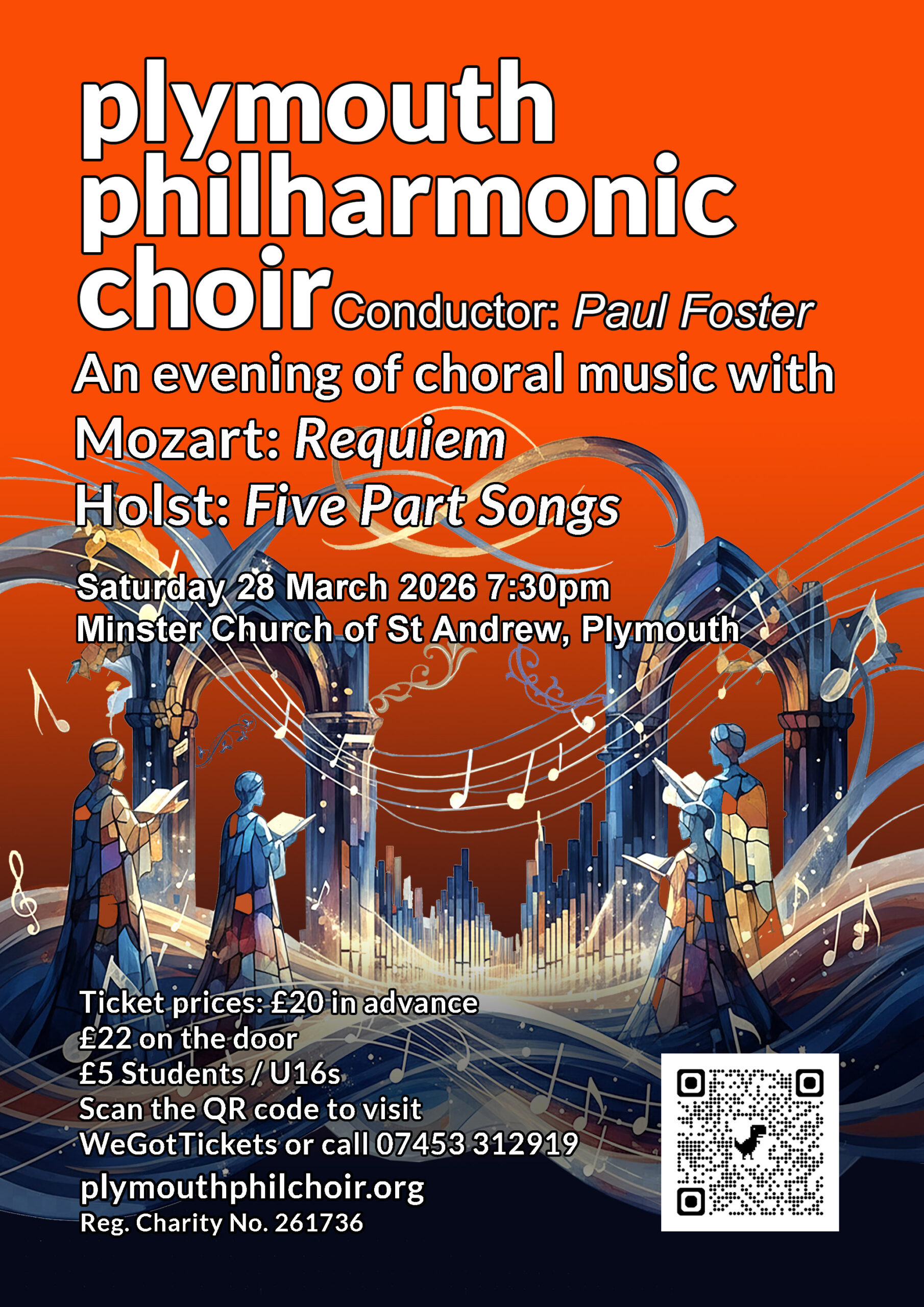
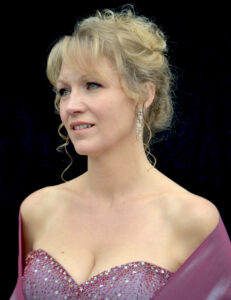 Catherine Hamilton – soprano
 Robyn Lyn Evans – tenor
 Clare McCaldin – mezzo-soprano
 RICHARD WIEGOLD – BASS